Updated: September 5, 2026
Song Kang’s Kang Pi-o wins an international piano competition and still looks miserable.
Most of us would take a hundred photos of the trophy and send at least three to the family group chat. Pi-o treats first place like a bill that has come due again.
That is the hook of Netflix’s Four Hands, Two Sonatas: two gifted teenage pianists, one elite Korean arts high school and enough pressure to make every audition feel like a verdict on who they are.
The drama is stylish and emotional, but it leaves a very ordinary question behind:
Are Korean arts high schools really this competitive—and can one audition or rival change a student’s future?
Quick answer
The pressure is real; the beautiful concentration of prodigies is television. Practical auditions can matter enormously, comparison is hard to escape, and arts students often balance regular schoolwork with long hours of specialist training. But not every hallway is full of future stars, and no fictional school represents every Korean arts high school.
The Moment Music Becomes a Ranking
For many children, music begins as play. They learn a song they like, perform for their family and feel proud when a teacher notices an improvement.
Once they decide to pursue music seriously, however, the vocabulary changes. There are audition pieces, judges, rankings, acceptance lists and competition results. A friend’s beautiful performance can inspire admiration and panic at exactly the same time.
That is why Pi-o’s unhappiness makes sense even when his life looks enviable. He has spent so long being known as “the pianist who always comes first” that a mistake can no longer remain a mistake. It threatens his identity.
He is not simply thinking, “I played badly today.” He is wondering, “If I am not the best, what is left of me?”
This is one of the drama’s most believable ideas. Young artists are often asked to build a public identity before they have had enough time to build a private one. Praise feels good, but it can also become a cage when it is tied to only one result.
Yes, the Practical Audition Really Matters
Korean arts high schools do not all select or teach students in the same way. A school focused on classical music may feel very different from one known for practical music, dance or acting. Even schools in the same field can use different subjects, pieces and scoring systems.
Still, the drama is right about one basic reality: for a music applicant, the practical audition can carry enormous weight.
At Goyang Arts High School, for example, the published admissions formula for music applicants assigns 40 percent to middle-school grades and 60 percent to the practical examination. That is only one school’s formula—not a national rule—but it reveals the tension clearly.
A talented pianist cannot always ignore academic work. At the same time, strong classroom grades cannot replace the few minutes in which the applicant must sit down, control shaky hands and play.
Months of preparation may be compressed into one short performance. The student knows the judges will not see every late-night repetition, the day a difficult passage finally worked or the week it fell apart again. They will hear what happens in that room.
So when students in Four Hands, Two Sonatas listen closely to one another’s playing—or react sharply to a result—that is not pure melodrama. The funny part is that real students probably spend far less time having cinematic piano duels in sunlit corridors. Most are too busy practicing the same troublesome measures again.
The Real School Day Is Less Beautiful—and More Tiring
The school in the drama is designed to make music look romantic. There are handsome practice rooms, excellent instruments, teachers who immediately recognize rare talent and, conveniently, a rival capable of changing your life.
Real life adds less photogenic material: ordinary classes, assignments, commuting, lessons, practice-room schedules, university preparation and the occasional day when the hands simply refuse to cooperate.
Depending on the school and major, a student may attend regular academic classes and specialist lessons, then continue practicing after school or travel to a private lesson. A vocalist, dancer, actor and classical pianist will not have identical days, but the balancing act is familiar: schoolwork must continue while the body or instrument also needs hours of repetition.
That means talent is only the visible part. The less glamorous advantage is often endurance—the ability to return to the same passage after everyone is tired of hearing it, including the student.
There are also many small realities television rarely has time for. Practice rooms are not always available exactly when someone wants one. A long commute can steal energy before practice even begins. A bad performance may not produce a dramatic confrontation; it may simply make the ride home very quiet.
This quieter version of disappointment is common in any competitive education system, but art makes it feel especially personal. A mathematics score can feel like a result. A rejected performance can feel as if someone has rejected the sound of you.
The Cost Is More Than Tuition
A serious music education can reorganize an entire household. There may be private lessons, instruments, accompanists, competitions, transportation and decisions about where—and how often—a student can practice. The exact burden varies too widely to reduce to one honest “average price.” A pianist with access to an instrument at home is in a different situation from a student who must secure practice space. A competition-focused classical student may face different costs from a practical-music vocalist.
For scale, South Korea’s 2025 private-education statistics reported that high school students who participated in private education spent an average of KRW 793,000 per month across all subjects. That is not an arts-school figure and should not be presented as the price of studying piano. It is useful mainly as a reminder that private education already occupies a serious place in many Korean family budgets before the very different expenses of individual artistic training are considered.
Money is not the whole story, either. Families may arrange rides, sit through competitions, adjust work schedules and absorb a teenager’s anxiety on the night before an audition. Some parents push too hard; some quietly hold everything together; many do a mixture of both. There is no single “Korean arts parent,” just as there is no single arts-school student.
Four Hands, Two Sonatas turns this pressure into elegant family drama. In real homes, it may look less elegant: a parent asking whether today’s lesson went well, a student answering “fine,” and both deciding not to discuss the money or the fear hidden inside that word.
Not Every Arts High School Is an Idol Factory
International K-pop fans often recognize Korean arts high schools through photos of idols in uniforms. That can create the impression that these schools operate like teenage entertainment agencies.
They do not.
Some schools and departments focus on classical music, traditional Korean music, fine art or dance. Others offer practical music, broadcasting, acting or performance-related programs. An idol trainee may attend an arts high school because its schedule and subjects fit a performing career, but the trainee contract comes from an entertainment company—not from the school.
Most students will not debut in a famous group, win an international competition or become household names. They may continue to university, teach, perform, compose, work behind the scenes, change fields or decide that art belongs in their lives without becoming their entire livelihood.
This is where the drama’s elite setting can mislead viewers. It gathers unusual talent, powerful families, dramatic rivalries and life-changing teachers into one building because that makes a good story. The fictional school should be read as a concentrated stage built from several recognizable parts of Korean arts education—not as a documentary copy of one real campus.
What the Drama Gets Most Right
The most realistic part of Four Hands, Two Sonatas is not its admissions system or competition schedule. It is the uncomfortable feeling of hearing a friend play beautifully.
You can admire the music and still feel threatened by it. You can want to become closer to someone while also wishing they were slightly less talented. The thought “That was wonderful” can be followed, almost instantly, by “Then where does that leave me?”
Pi-o and Jeong-yo are compelling because each carries something the other lacks. Pi-o has technique, recognition and a place inside the system, but he has nearly forgotten the pleasure that brought him there. Jeong-yo still possesses an instinctive relationship with sound, yet talent alone does not protect him from fear, missing opportunities or an unfamiliar institution.
They are not simply “rich genius versus poor genius.” They represent two different dangers. One can be crushed by expectations after receiving every advantage. The other can be left outside the door even when the gift is real.
The drama makes those problems larger and prettier than everyday life, but it does not invent the emotional question underneath them: what happens when the thing you love becomes the thing by which everyone measures you?
Why “Four Hands” Is the Perfect Idea
In a solo competition, a pianist can win by being better than the person who played before. Four-hands piano requires something else.
Two players share one instrument. If one rushes ahead, plays too loudly or refuses to listen, the whole performance suffers. Sometimes the harder skill is not proving your own brilliance but making enough space for another person’s sound.
For Pi-o, who has been trained to protect first place, that may be the most difficult lesson imaginable. He has to stop treating the pianist beside him as evidence of his own weakness.
Jeong-yo also has to change. Hearing music privately is not the same as building it with someone else. He must enter another person’s rhythm, trust it and allow his own instinct to be answered.
That is why the title carries more emotional weight than a simple musical reference. Four hands at one piano cannot succeed by asking, “Who won?” They must ask, “Did we listen?”
Perhaps the drama’s real question is not which boy is the greater pianist. It is whether music can become joyful again after it has been turned into a ranking.
Listen Differently in the Next Episode
The next time Pi-o stiffens while people applaud, or Jeong-yo notices music inside an ordinary sound, the performance may feel different.
These are not simply perfect prodigies living in a beautiful school. They are teenagers who were asked too early to prove that their talent justified every sacrifice made for it.
And that may be why viewers care about them. The setting is unusually glamorous, but the feeling is familiar: the fear that being second means being forgotten, and the hope that one person might hear us without turning us into a score.
Sources used for factual checks
Two Fun Videos Before You Go
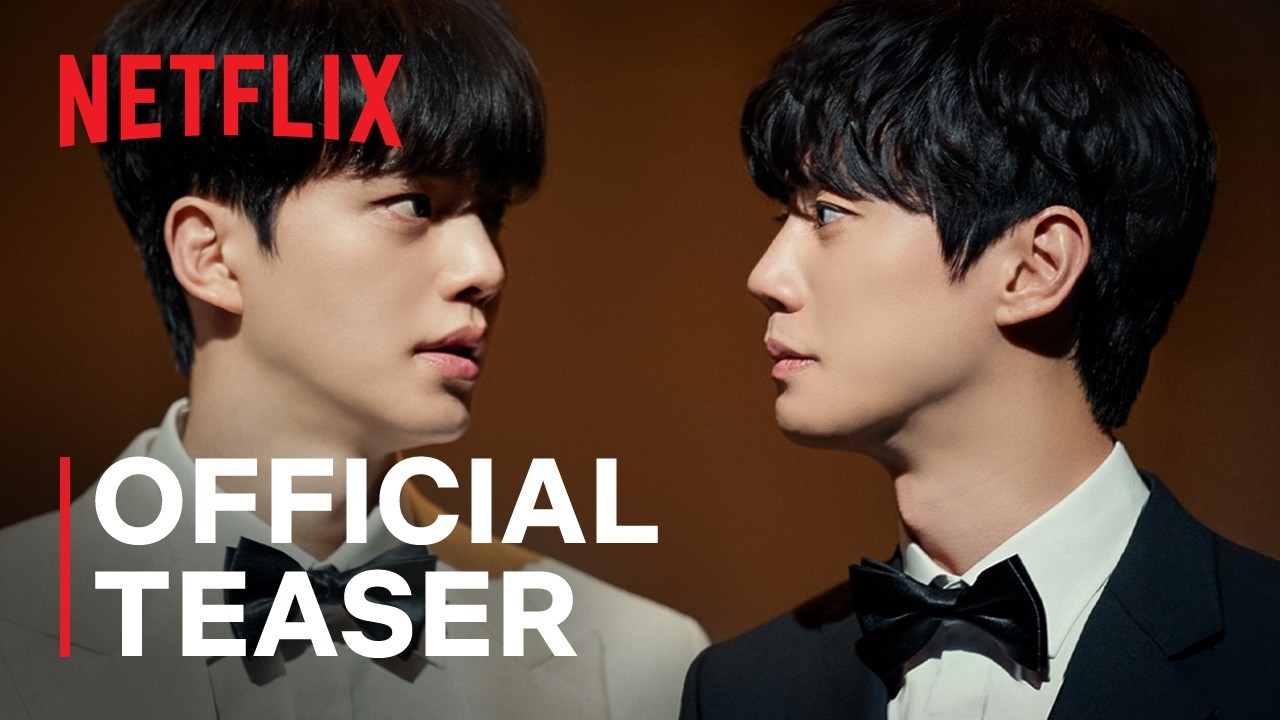
What it shows: Netflix’s official trailer puts Song Kang and Lee Jun-young inside the competitive music-school world discussed in this article.
Why watch: It gives you the drama first—the faces, rivalry and music—before any explanation about Korean education.
Watch for: Notice how quickly the trailer turns a piano competition into a relationship story.
Watch on YouTube →
What it shows: BTS turn fear of losing one’s love for art into a cinematic performance.
Why watch: It is a natural emotional companion to a drama about young musicians whose talent has become pressure.
Watch for: Watch how dance, empty space and dark imagery carry the feeling even before you focus on the lyrics.
Watch on YouTube →
Sources and factual checks: Netflix — Four Hands, Two Sonatas; Goyang Arts High School admissions guide; South Korea private-education statistics. Information checked September 4, 2026.
Post a Comment