Updated: September 7, 2026
There are two very different ways to watch a beautiful stranger hide the fact that she is not human.
In the first story, you hope the man beside her notices before it is too late.
In the second, you hope he does not discover the secret yet—because you already want them to stay together.
That change in sympathy explains a surprising amount about the modern K-drama gumiho.
The creature did not need to lose all of its old traits to become romantic. Writers changed whose fear, loneliness and desire the audience was asked to follow.
The Old Fear Was Not Just “A Fox with Nine Tails”
In widely known Korean fox tales, the gumiho can transform into a human—often a beautiful woman—and approach people while hiding its true nature. The Ministry of Culture’s English-language cultural introduction also notes the creature’s long association with danger, deception and the fox bead, while showing how modern dramas have rewritten the figure. Cultural reference →
What makes the old stories unsettling is not simply the number of tails.
The person in front of you looks human. The danger comes from the possibility that appearance, affection and identity do not match.
That is a powerful story engine because it turns ordinary trust into a risk. The monster is already inside the relationship before the human realizes there is a monster.
Older fox stories are also not one perfectly standardized Korean canon. Some emphasize seduction, some transformation, some the fox bead, and different retellings change what the creature wants from humans. That variety matters because modern television writers are adapting a family of motifs, not translating one official “gumiho manual.”
The female image became especially strong in popular memory, which makes the modern rise of male gumiho leads feel like a visible change. It is not that male fox spirits were impossible in all older storytelling; the modern drama simply made the gender reversal central and commercially recognizable.
Move the Camera to the Fox, and the Same Secret Becomes Romantic
Modern romance can use exactly the same disguise from the opposite emotional angle.
Now the gumiho may be hiding its identity because exposure could lead to rejection, separation or danger. The audience knows the secret and watches the human character slowly move closer without knowing the full truth.
The suspense is still there. It has simply changed sides.
| Old Motif | Horror Use | Romance Use |
|---|---|---|
| Human transformation | A predator can pass as someone trustworthy. | A lover must hide what they really are. |
| Long life | An ancient being feels inhuman and unknowable. | The couple may not be able to age together. |
| Supernatural power | The human cannot easily escape. | The gumiho can protect the human but also make the relationship dangerous. |
| Fox bead | A strange source of power or threat. | A device that can physically bind two characters’ fates. |
Four Dramas, Four Different Uses of the Same Creature
2010 — My Girlfriend Is a Gumiho
The fox becomes a romantic-comedy heroine. Her supernatural nature is still important, but the audience is invited to care about her feelings and her future with a human man.
2020 — Tale of the Nine-Tailed
The central gumiho is male, powerful and already embedded in the modern city. The creature expands beyond the old “beautiful woman who seduces men” image and becomes a fantasy-action romantic lead.
2021 — My Roommate Is a Gumiho
A fox bead creates the practical reason a human student and a male gumiho must remain close. Folklore becomes a cohabitation-romance engine.
2026 — No Tail to Tell
The familiar goal is reversed. The gumiho does not want to become human, and becoming ordinary becomes the problem rather than the prize.
Tale of the Nine-Tailed — Official Trailer
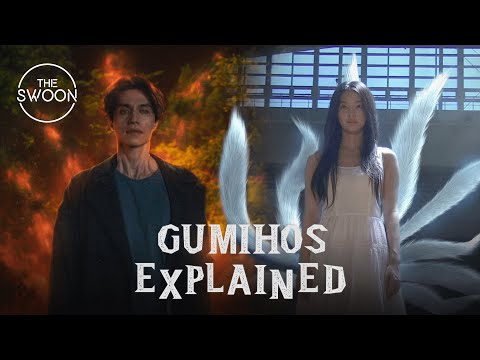
What it shows: Lee Dong-wook as a male nine-tailed fox living in contemporary Korea.
Why watch: it shows how far the modern role has moved from the older image of a dangerous female seducer.
Watch for: the mix of romance, urban fantasy and old supernatural rules inside a modern setting.
Why Romance Writers Like the Gumiho So Much
A normal romance writer needs reasons to keep two people apart.
Family disapproval works. Work rivalry works. A long-distance relationship works.
A gumiho gives the writer several obstacles at once.
- Identity: “Will you still love me if you know what I am?”
- Time: “Can we stay together if one of us lives far longer?”
- Body: supernatural rules can make touch, hunger or physical proximity dangerous.
- Belonging: becoming human may require giving up power, freedom or a former identity.
- Choice: love can become a decision about whether one person must change for the relationship to work.
Those are fantasy problems, but they resemble ordinary relationship fears closely enough to remain emotionally legible.
There is another advantage for romance: the power imbalance can move in both directions. The gumiho may be physically stronger and centuries older, yet socially vulnerable because the human world can reject what it does not understand. A human lead may look ordinary but hold the power to accept, expose or abandon the supernatural partner.
That reversal keeps the relationship from becoming a simple “powerful immortal rescues weak human” fantasy. The stronger body can belong to the more insecure person in the relationship.
That is the trick. The fox can be hundreds of years old; the insecurity can still feel very current.
It also gives writers a built-in choice about how much Korean cultural texture to use. One series can lean heavily into mountain spirits, reincarnation and old grudges; another can keep only the gumiho identity and build a light campus or workplace romance around it. The creature is recognizable enough to carry both approaches.
Why the Rules Change from Drama to Drama
One gumiho needs a fox bead. Another has different conditions for becoming human. One can harm people; another avoids doing so. One drama treats immortality as a gift; another treats it as loneliness.
Viewers sometimes ask which set of rules is the “real” Korean folklore.
That question assumes folklore works like a franchise bible written by one author. It does not. Stories were retold and changed long before television writers began adapting them.
Modern writers then select a few recognizable ingredients—fox, transformation, long life, hidden identity, fox bead—and build new rules that serve a specific plot.
The fox bead is a good example. In one drama it can store energy, in another it can be transferred, swallowed or used to connect two lives. The fact that the motif has older roots does not make every modern rule traditional. The moment a drama gives the bead a precise deadline, medical effect or romance mechanic, you should treat that rule as part of that drama’s world unless another source says otherwise.
The same goes for “one thousand years,” number of good deeds or exact conditions for humanity. These details can sound ancient because they are wrapped in folklore imagery, but some are modern screenwriting choices.
So the best way to watch is to separate traditional motif from drama-specific rule. The first gives you cultural recognition. The second tells you what kind of story this particular drama wants to create.
No Tail to Tell Reverses the Old Reward
Many supernatural romances treat becoming human as the obvious happy direction. A human life allows the nonhuman character to share time, aging and ordinary intimacy with the person they love.
No Tail to Tell begins from a less obedient question: what if the gumiho does not think humanity is an upgrade?
Eun-ho has spent centuries moving toward humanity and then decides she does not want it. An accident turns her human anyway. That immediately changes the emotional problem. The story is no longer only about earning the right to become human; it can ask what is lost when a powerful nonhuman woman is forced into ordinary limits.
That is a useful sign of how durable folklore survives. The creature stays recognizable, while the value system around it can change.
Urban settings help too. A gumiho no longer needs to live on a remote mountain to feel mythical. Putting one in an apartment, office, restaurant or Seoul street creates immediate contrast between an ancient lifespan and ordinary modern inconveniences. The supernatural character can understand centuries of history and still be confused by dating etiquette, rent, social media or a human job.
That comic friction is one reason the creature moves so easily between horror, action, romance and comedy. The mythology supplies scale; everyday life supplies intimacy.
Remember the old core: fox, transformation, hidden identity, unusual power, sometimes the fox bead. Then ask what the current drama changes—and what relationship problem that change creates.
That is usually more useful than trying to force every gumiho into one rulebook.
Stray Kids — “Thunderous”
Stray Kids’ “Thunderous” is not evidence about gumiho folklore. It is included simply as a visual contrast: another example of Korean pop culture freely reworking traditional imagery for a modern audience.
Bukchon and Anguk: Old Seoul Inside the Modern City
The Bukchon–Anguk video closes the article in a place where old architecture and modern Seoul sit side by side, which suits the article’s theme without turning the dessert into another lecture.
Netflix’s Mousetrap: Why Does the Rat Eat Fingernails?
Another example of an old Korean story surviving by changing what it is afraid of in the modern world.
Post a Comment