The Melon Music Awards is expanding into a two-day event on November 14 and 15, 2026. For viewers, that may sound like a simple scheduling change. For Korea’s music business, it reflects a much larger question: can an awards show built around a domestic streaming service become a truly global K-pop platform without weakening the data that made it distinctive?
Why two days matter
Korean year-end music shows have become overloaded. Major awards, chart honors, rookie stages, collaborations and elaborate performances must compete for time in a single broadcast. The result is often a long ceremony that still leaves some artists and genres with little room.
A two-day format gives MMA more inventory. It can accommodate additional performers, longer stages and clearer thematic divisions. It also creates another day of ticket sales, online conversation, sponsorship exposure and short-form content.
But expansion creates expectations. If the second day merely stretches the same ceremony, fans will experience it as added viewing labor. The two days need different identities.
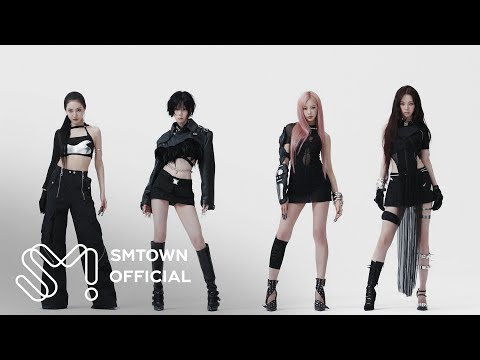
Watch: the performance scale behind modern K-pop awards
A major awards stage is no longer a television performance with extra dancers. It is a temporary concert production designed to generate clips that circulate globally after the broadcast.
Global TOP10 changes the meaning of popularity
Melon’s traditional authority comes from Korean listening data. That is valuable precisely because it does not simply duplicate Spotify, YouTube or Billboard. A Global TOP10 category, supported by overseas platform relationships, introduces a second map of popularity.
| Measure | What it can reveal | What it may miss |
|---|---|---|
| Korean Melon data | Domestic public listening and fandom strength | Markets where Melon is unavailable |
| Global platform data | Cross-border reach and regional momentum | Differences between platform access and paid tiers |
| Fan voting | Organization and active engagement | Casual listeners and unequal voting capacity |
| Judges | Professional assessment and context | Transparent comparison if criteria are unclear |
The most interesting result may not be which artist ranks first. It may be the gap between the Korean and global lists. A song can be culturally unavoidable in Korea while another act has a much larger international streaming footprint.
The Korean insight: chart power and public recognition are not identical
Korean fans often distinguish between fandom-driven performance and 대중성, or general-public reach. The boundary is imperfect, but it shapes how awards are debated.
An artist can sell enormous numbers of albums and dominate voting while remaining less familiar to casual Korean listeners. Another can have a widely recognized hit but a smaller organized fandom. MMA’s identity has historically leaned toward listening data, making it an important counterweight to purely vote-heavy competitions.
The danger of global expansion is not globalization itself. It is building a formula so complicated that viewers cannot understand why one artist won. MMA should publish the eligible platforms, regions, measurement period and weighting in plain language.
What international fans should check
- Whether global listening data and fan votes are treated separately
- Which countries and platforms contribute to Global TOP10
- Whether both days receive equivalent streaming access
- How performances are divided between the two programs
- Whether subtitles and official clips are available quickly
What would make the two-day format worthwhile?
One strong option would be to give the days distinct editorial purposes. One could emphasize chart history, emerging artists and genre breadth; the other could focus on major awards and large-scale performances. The program could also make more room for producers, composers and musicians who rarely receive the same global visibility as idols.
The format will succeed if it explains the Korean music market more clearly. It will fail if it simply doubles the spectacle.
Dessert: K-pop built for a global clip economy
IVE’s “REBEL HEART” demonstrates the combination of visual identity, immediate chorus and multilingual shareability that now powers global K-pop circulation.
The takeaway
MMA 2026 is not simply becoming longer. It is attempting to represent two overlapping music economies: the Korean streaming market and global K-pop fandom.
The difficult work begins after the stage design. Fans must be able to see what was measured, why the categories exist and how domestic success differs from international reach.
Kakao Entertainment — MMA2026 format and Global TOP10 →
Fan activity inside Global-K Chart and the separate 20% official MMA vote are different stages of the methodology. Overseas fans use Berriz for the official vote, while domestic voting runs through Melon.
The separate Millions TOP10 category is being discontinued for MMA2026. That older award was tied to albums passing one million Melon streams within 24 hours. Global TOP10 shifts the focus toward cumulative multi-market artist performance instead.
The Global-K Chart itself integrates data from Melon in Korea, Tencent Music Entertainment in China and LINE MUSIC in Japan, including streaming and fan-activity signals. That makes it a cross-market K-pop metric, but not a chart of every Spotify, Apple Music or YouTube stream worldwide.
MMA2026’s new Global TOP10 is not simply an overseas fan-vote award. Kakao Entertainment says 30 candidates are first selected through cumulative Global-K Chart performance. The final result then combines 60% Global-K Chart score, 20% judging and 20% fan voting.
2026 Update: Global TOP10 Uses a 60–20–20 Final Formula
Sources: Kakao Entertainment, MMA 2026 lineup announcement, Melon Global K-Chart
Post a Comment