K-Drama Society, Decoded
In Crash Course in Romance, romance does not move only through a chance encounter. Relationships change according to who secures a famous math instructor’s class, which parent hears the news first and whose timetable contains a student’s evening. In SKY Castle, an admissions coordinator gains access to a family’s secrets and ambitions.
The power of the hagwon can look exaggerated to an international viewer. But these private academies carry far more social weight than a simple after-school classroom.
A hagwon is a fee-charging private institute outside the regular school system, teaching subjects, test preparation, arts and other skills. K-dramas return to hagwons because college competition, star instructors, limited class seats, parent information networks, long student schedules and household spending meet there. One setting can reveal educational anxiety, class, caregiving, work, urban time and family conflict at once.
1. A Hagwon Is Neither a School Nor Private Tutoring
English subtitles variously translate hagwon as “academy,” “cram school” or “private institute.” None captures every type. Korea has large subject institutes preparing students for school exams and university admission, but also English, mathematics, essay-writing, piano, art and coding academies.
A schoolteacher works inside the public or private formal-education system. A hagwon instructor competes for students in a private education market. One-to-one tutoring is tailored to an individual or small group; a hagwon operates with classes, timetables, counseling, proprietary materials, marketing and—in some cases—an instructor’s personal brand.
| Person or place on screen | Real-world function | Conflict a drama can create |
|---|---|---|
| “One-hit” star instructor | A highly recognized, high-demand teacher in a subject or platform | Scarce seats, extreme expectations, branding and overwork |
| Information session or counseling room | A place to learn about classes, placement and admissions | The gap between families inside the information flow and those arriving late |
| Parent network | Exchanges news about teachers, textbooks, tests and schools | Cooperation mixed with rumor, competition and exclusion |
| Admissions coordinator | A dramatized, often extreme manager of a student’s strategy | A thriller device that can control a family’s fear and secrets |
| Late-night academy district | Lessons and travel continuing after the school day | Student exhaustion, parental logistics and instructors’ late work |
2. The Numbers Are Larger Than a Few “Obsessive Parents”
According to the 2025 survey of private education for elementary, middle and high school students, released by Korea’s Ministry of Data and Statistics and Ministry of Education in March 2026, total spending was about 27.5 trillion won. The participation rate was 75.7 percent, and participating students spent an average of 604,000 won per month.
Total spending and participation fell from the previous year, while average spending among participants reached a new high in the survey, pointing to a possible concentration of burden. Students do not all study the same subjects with the same intensity. Region, household income, school level, grades and family choice produce large differences; the survey also found higher spending and participation among higher-income households.
That is why a hagwon bill on screen is never only a price. It also reveals who has time to drive a child, who receives information first and who can absorb the cost of a plan that does not work.
3. Hagwons Change the Clock of the City
One of the best ways to read a hagwon scene is to watch the clock rather than the report card. After school, a student may eat quickly, cross neighborhoods and move between classes. A caregiver coordinates pickup with siblings’ schedules. An instructor’s busiest hours begin as office workers are going home, while counseling and lesson preparation continue after teaching.
The writer of The Midnight Romance in Hagwon described academy instructors as living according to students’ school timetables, with their personal time often beginning only after 10 p.m. The dark streets and late-lit classrooms in the drama are not just romantic mood. They show an industry that becomes busiest after most people’s day is supposed to end.
This clock produces convenience-store dinners, conversations in parked cars, sleeping siblings and parents waiting by their phones. Dramas use hagwons repeatedly because this routine can press on a family longer than one exam result.
The Midnight Romance in Hagwon — Official Trailer
The CJ ENM trailer frames the hagwon not only as a student setting but as the instructors’ workplace. The lesson ends; competition, curriculum, recruitment and personal relationships do not.
4. Why Does a Star Instructor Look Like a Celebrity?
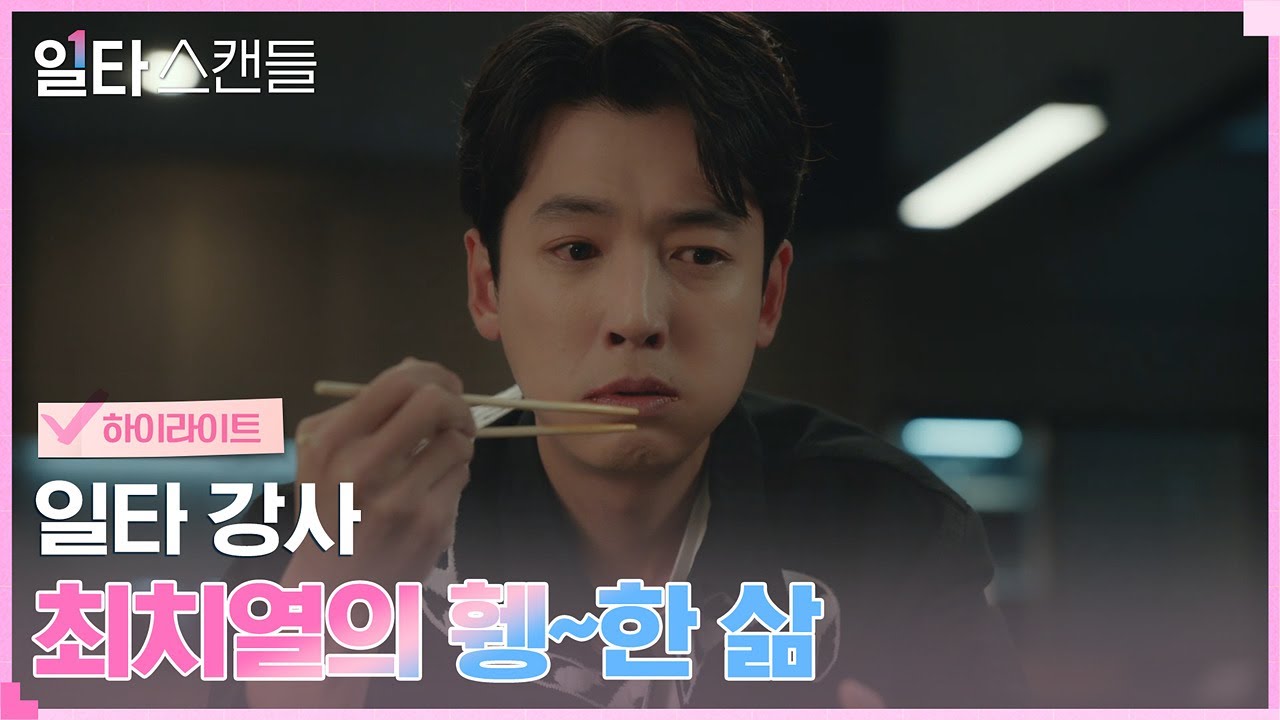
The Korean term ilta gangsa, often translated as “star instructor,” is not an official qualification or a nationally certified number-one rank. It is a market term for a teacher with exceptional recognition, demand, sales or enrollment within a subject, academy or online-education platform.
If parents and students believe that one teacher’s lectures and materials provide a crucial route to higher scores, that teacher’s time becomes scarce. Waiting lists, information sessions, advertising and online courses grow into a brand economy. Crash Course in Romance turns this structure into romantic comedy by managing Choi Chi-yeol almost like an entertainment star.
That does not mean every hagwon instructor is rich or famous. Many work under pressure to recruit and retain students, produce results, negotiate contracts and teach late at night. The celebrity at the top can obscure an ordinary and sometimes precarious education-service workforce.
5. Sometimes the Most Dramatic Prop Is a Seat
A seat in a famous instructor’s class is not simply a chair. It is a scarce object where information, money, travel time and expectations about exam results meet. One parent knows the waitlist. Another hears about a cancellation first. A third can change the family schedule at a moment’s notice.
This is why an ordinary registration scene can acquire the tension of a thriller. Access does not reflect a child’s academic ability alone. It also reflects how quickly a household can collect information and how flexibly it can reorganize time. Losing the seat can feel like more than missing one class; it threatens the future plan a parent has built around it.
6. Three Dramas Use the Same Hagwon in Different Ways
SKY Castle connects private education to upper-class status reproduction and fear. Parents treat admission to an elite university as a verdict on the family, then attempt to monopolize information and expertise. Its admissions coordinator is less a portrait of every real counselor than a thriller device pushing those desires to an extreme.
Crash Course in Romance reframes the star instructor and scarce seat as a problem of care. The deeper question is not only which parent is more competitive, but how much work and how many relationships a caregiver must rearrange to support one child’s desired education. When the side-dish shop meets the academy district, the clocks of livelihood and education collide.
The Midnight Romance in Hagwon treats the academy as an adult workplace. Teaching quality, rival institutes, student recruitment, curriculum and instructor reputation give the romance an employment system rather than a decorative background.
The same building can support a class thriller, family romance and workplace melodrama because students, parents, teachers, counselors and business owners all occupy it at once.
7. Why Are Mothers So Visible While Fathers Recede?
Education dramas often show mothers attending information sessions, monitoring group chats, arranging pickups and meeting instructors. Fathers may learn about a crisis late or demand the result without managing the daily schedule. Reading this only as “Korean mothers are obsessive” misses the labor being dramatized.
The story concentrates invisible education-management work in one character. Building a timetable, verifying information, managing transport and absorbing a child’s emotions are forms of labor separate from paying the bill. Real families divide these roles in many ways, but a drama can place them on the mother to make conflict immediately visible.
The result is a moral imbalance: the mother becomes easy to condemn as controlling, while a family member who demands success but performs less daily management can remain in the background. A better question is not “Which parent is bad?” but who owns the family’s educational time, information and emotional labor?
That person often reveals the real cost of the hagwon plot. Tuition is visible; waiting, driving, researching, feeding and worrying are easier for both characters and viewers to overlook.
8. Five Things to Watch in the Next Hagwon Scene
- Time: How is the student’s day divided among school, travel, academy and self-study?
- Seats: Who gets into the prestigious class, who waits and who is displaced?
- Information: Who hears about teachers and admissions first, and who remains outside the network?
- Money: Beyond the fee, who can keep investing or absorb a failed plan?
- Care and work: Whose time moves the student, and whose late-night labor keeps the academy running?
These five axes turn the hagwon from a shorthand for “Korean study fever” into a system that distributes choices among characters. In the next academy scene, look beyond the test score to the person managing someone else’s hours. That is where romance, class and family conflict often meet in the same corridor.
Sources
- Yonhap News Agency — 2025 private-education spending, participation and per-student figures
- Ministry of Data and Statistics / Ministry of Education — 2025 private-education survey release
- The Korea Times — hagwon instructors and The Midnight Romance in Hagwon
- OECD — Education at a Glance 2025: Korea
- Arirang / 1DAY 1KOREA — The Daechi Scandal and Korea’s elite private-education district
- Statistics and video pages checked September 16, 2026. The 2025 survey figures were released March 12, 2026.
Related Videos
The Daechi Scandal — Korea’s Private-Education World
Arirang’s film feature uses The Daechi Scandal to introduce the elite academy district where teachers, parents and students meet inside Korea’s private-education race.
Why the “SKY Castle Dream” Is More Distant
Korea Now examines why the old promise connecting elite education with secure mobility has become more expensive and uncertain for many families.
Post a Comment