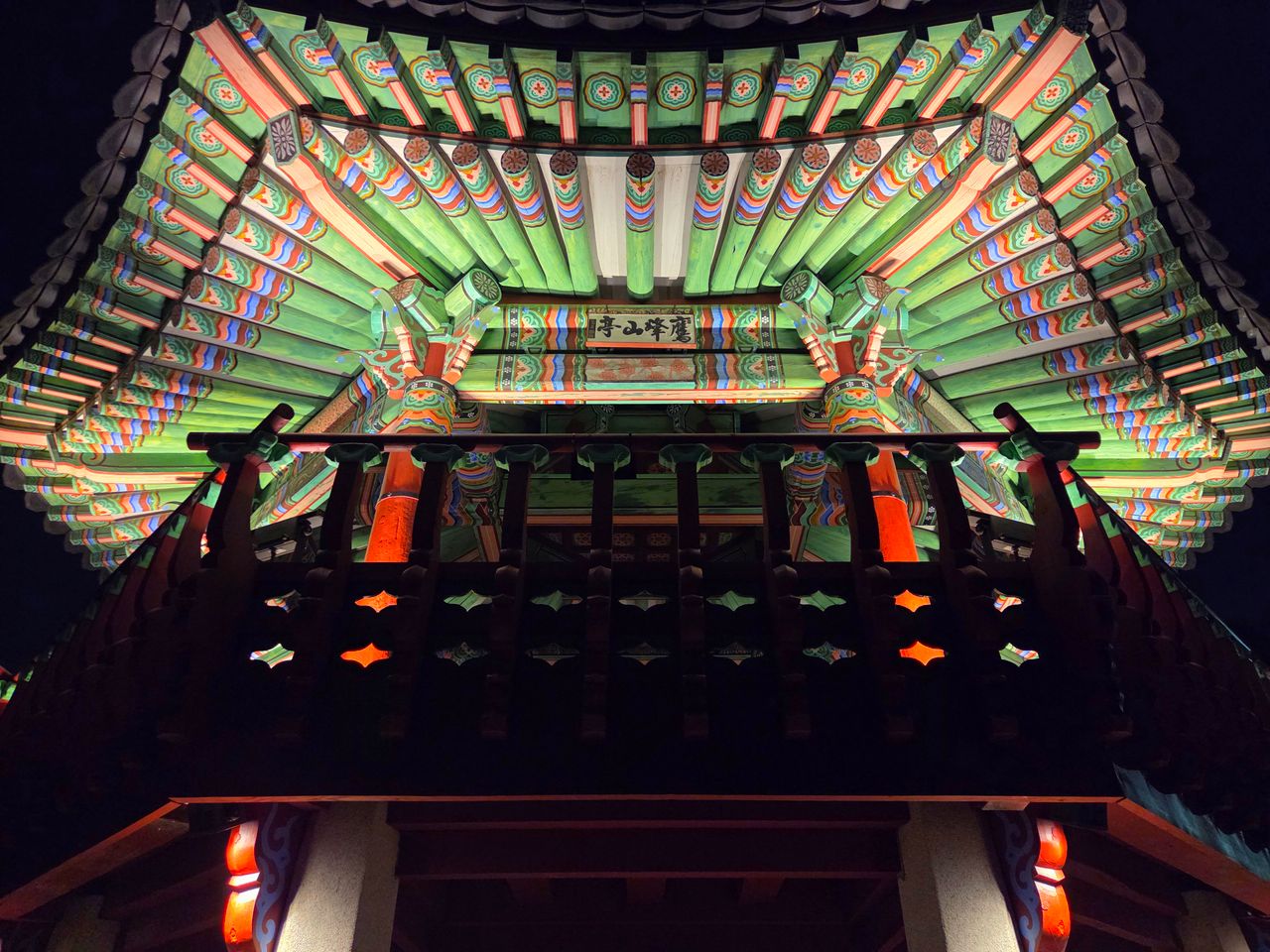
Traditional Korean visual context · Pexels free-use photo
Last verified: September 25, 2026 · 2026 merchandise schedule and cultural references reviewed.
BTS’s 2026 DALMAJUNG collection includes objects that may look unusual beside ordinary K-pop merchandise: a miniature broom, a ceramic jar, a pollock-shaped fortune magnet and even a pouch with seven gonggi stones.
The design links BTS’s ARIRANG era with munjado, a form of Korean folk painting built around decorative characters, and the lyric 흉즉대길 from “Aliens.”
English coverage does not use one consistent romanization for 흉즉대길. You may see Hyungjeukdaegil or heungjeukdaegil. The Korean expression is the reliable reference point; the spelling difference is a romanization issue, not two separate phrases.
| Term | What it refers to |
|---|---|
| DALMAJUNG | 달마중 — going out to welcome or watch the rising moon |
| Munjado | 문자도 — folk painting that combines written characters with symbolic images |
| Hyungjeukdaegil / heungjeukdaegil | 흉즉대길 — an apparently ominous turn leading to great good fortune |
Dalmajung means welcoming the moon
Dalmajung comes from the Korean words dal (moon) and majung (going out to meet or welcome someone or something).
The word existed long before BTS used it for merchandise.
Moon-welcoming customs are associated particularly with traditional full-moon observances such as Jeongwol Daeboreum, when people watched the moon and made wishes for health, peace or a good year.
BTS began using DALMAJUNG as the name of a heritage-inspired official merchandise line in 2021. The 2026 release is the fourth DALMAJUNG series and the second collaboration involving HYBE and the National Museum Foundation of Korea after their earlier MU:DS project.
This year’s collection moves beyond simply placing traditional patterns on modern products. The designers use an older visual method — munjado — to reinterpret words tied directly to BTS and the ARIRANG album.
Munjado turns writing into a picture
문자도, munjado literally means “character painting” or “letter painting.”
It is associated with Korean minhwa, the broad field of folk painting that flourished during the Joseon period. In traditional munjado, a written Chinese character could be surrounded by, filled with or visually transformed through flowers, animals and objects linked to the character’s meaning.
Confucian virtues such as filial piety, loyalty, trust, propriety and righteousness often appeared in older examples. The picture was not merely decoration around a word. The images helped carry the idea expressed by the character.
The 2026 BTS collection adapts that visual logic rather than reproducing an old painting unchanged.
Its new designs incorporate words connected to BTS and ARIRANG with cranes, deer, clouds and other motifs associated with the traditional Ten Symbols of Longevity.
An English-language overview of Korean folk painting. Munjado is discussed as one of the major minhwa forms. This is independent educational material, not an official BTS video.
Open on YouTube →
흉즉대길 comes from “Aliens”
The phrase at the center of this year’s design is 흉즉대길(凶則大吉), used in BTS’s “Aliens” from ARIRANG.
HYBE’s explanation describes the phrase as carrying a paradoxical idea: something that appears ominous or unfortunate can turn toward great good fortune.
That explains why a phrase beginning with 흉, a character associated with bad fortune or an ominous sign, appears on products built around wishes for luck and well-being.
The entire phrase is important. It is not merchandise wishing misfortune on the owner.
Some English reporting writes the phrase as heungjeukdaegil; other coverage uses hyungjeukdaegil. BTS’s Korean material uses 흉즉대길. There is no need to treat one English media spelling as a separate Korean expression.
Why a broom and pollock appear in BTS merch
The product list makes more sense once the collection’s theme is understood.
A miniature desk broom draws on the image of sweeping in good fortune. A ceramic jar and incense items use forms associated with traditional domestic objects and ideas of purification or peaceful living. A pollock-shaped magnet borrows from a familiar Korean apotropaic image — an object associated with keeping bad fortune away.
The gonggi set moves in a slightly different direction. Gonggi is a traditional Korean children’s game played by tossing and catching small stones or plastic pieces in sequences. The official set contains seven playing stones in a small pouch.
These objects should not be presented as evidence that modern Koreans uniformly follow the same folk beliefs.
A good-luck broom on BTS merchandise is a cultural symbol used in contemporary product design. It does not mean every Korean household performs the same ritual with a broom, jar or dried pollock.
The collection works by taking recognizable ideas of good fortune, warding off misfortune, longevity and play, then converting them into contemporary merchandise.
The ARIRANG connection is in the words and images
ARIRANG is already a culturally loaded album title because “Arirang” is Korea’s best-known traditional folk song, existing in many regional and musical versions.
The 2026 DALMAJUNG collection does not stop at that title.
It brings together the album’s language, a lyric from “Aliens,” a Joseon-era folk-art format and longevity imagery. That combination explains why the result looks different from merchandise that simply adds a palace, hanbok pattern or Hangul logo to a modern product.
The heritage reference is part of the structure of the design.
2026 sales schedule
The official Weverse notice gives three main purchase routes.
- Weverse Shop: sales begin September 29, 2026 at 11:00 a.m. KST.
- 2026 BTS DALMAJUNG POP-UP at HYBE Yongsan: September 29 to October 11. The pop-up uses an online reservation system.
- National Museum of Korea, Museum Shop 2: September 29 to November 30.
The official notice also warns that stock is limited and sales can end early.
The keyboard is listed as a Weverse Shop pre-order item, while the museum and HYBE pop-up carry the collection with some channel-specific differences. Anyone traveling specifically to buy an item should check the current product list before going.
For fans searching the unfamiliar words on the collection, the shortest route is straightforward: DALMAJUNG supplies the moon-welcoming frame, munjado supplies the visual method, and 흉즉대길 supplies the ARIRANG-era lyric that the designers turned into a modern character painting.
Post a Comment