Updated: September 7, 2026
If you mainly watch K-dramas on Netflix, the production process probably seems obvious. Write the script, film the show, edit it, then release the finished episodes.
Korean television did not always work that way. For years, many dramas started airing while later episodes were still being written, filmed and edited.
A viewer could be watching Episode 4 while the production team was still racing to make Episodes 10 or 12. This became known as Korea’s live-shoot system.
The name is easy to misunderstand. The actors were not performing the drama live on television.
“Live-shoot” meant that broadcasting and production overlapped. By contrast, Netflix Korea said in 2026 that it had established a 100% pre-production system for its Korean originals.
Live-shoot lets a drama keep changing after viewers arrive, but it pushes enormous time pressure toward the end of production. Full pre-production gives filming and post-production more stability, but requires more decisions and money before anyone knows how viewers will react.
Neither system automatically creates higher ratings. They place creative, financial and scheduling risk in different places.
1. Live-Shoot vs Full Pre-Production at a Glance
| Factor | Live-Shoot | Full Pre-Production |
|---|---|---|
| Story lock | Later episodes can still change after broadcast begins. | Most major story decisions are locked before release. |
| Production period | Filming and editing overlap with weekly broadcast. | Longer lead time before release is common. |
| Budget | Not automatically cheaper; emergency schedules can create inefficiency and labor pressure. | Not automatically more expensive, but more cash and commitments can be required earlier. |
| Viewer feedback | Strong advantage: later story can respond to ratings and audience reaction. | Major reshoots or story changes are difficult after filming is complete. |
| Ratings response | Can adjust while the series is airing. | Re-editing is possible, but the finished story is much less flexible. |
| Post-production | Editing, sound and VFX time can become severely compressed. | More predictable time for editing, VFX, sound and color work. |
| Global distribution | Works better for a domestic weekly broadcast cycle. | Better suited to subtitles, dubbing, review requirements and multinational delivery. |
| Cast & crew | Historically associated with extreme deadline pressure and long hours. | Reduces weekly broadcast pressure, but does not automatically guarantee good labor conditions. |
| Where risk sits | Risk piles up late: deadlines, fatigue and unfinished work. | Risk moves forward: capital and creative choices are committed before audience response. |
Live-shoot moves risk toward the end of production. Pre-production moves risk toward the beginning.
2. Why Did Korea Use Live-Shoot for So Long?
It is tempting to dismiss the old system as bad planning. That explains only part of it.
Live-shoot also offered something valuable: the drama could still respond to its audience.
An unexpected supporting character might become popular. A romance might attract more attention than producers expected.
Because later episodes were unfinished, writers and producers had room to change emphasis. Ratings and viewer response could become production information rather than merely a final score.
3. Which System Costs More?
There is no reliable rule that says full pre-production is always more expensive. Genre, cast, VFX, overseas filming and episode count matter more to the final bill.
The big financial difference is often when the money must be committed. Pre-produced projects can require major spending before the broadcaster or audience generates any return.
Korea Communications Agency research notes that in today’s Korean drama market, scripts for the first four episodes plus contracts for a director and two or three lead actors can require at least about KRW 1 billion before a platform deal is secured.
In that industry report, “pre-production” refers mainly to the planning and packaging stage before scheduling, not necessarily to finishing every episode before broadcast.
That distinction matters. Full pre-production and the industry’s broader “pre-production” planning stage are related, but they are not identical terms.
Live-shoot does not make costs disappear either. Emergency filming, long hours and compressed production can simply move those costs—or their human consequences—to the other end of the schedule.
4. Does Pre-Production Give Actors and Crews a Better Life?
There is no trustworthy industry-wide “satisfaction score” that lets us rank the two systems. Claims such as “actors are 30 percent happier” would be invented.
But there is strong evidence about working conditions. Korean research has documented long hours, unclear rest periods and deadline pressure under the near-real-time production system.
Pre-production can remove one major source of stress: the need to finish tomorrow’s broadcast today.
That does not automatically create a good workplace. In 2025, Korean reporting still found staff doing one or two months of preparation before principal photography without being paid for that preparation period.
5. Descendants of the Sun Became the Famous Turning Point
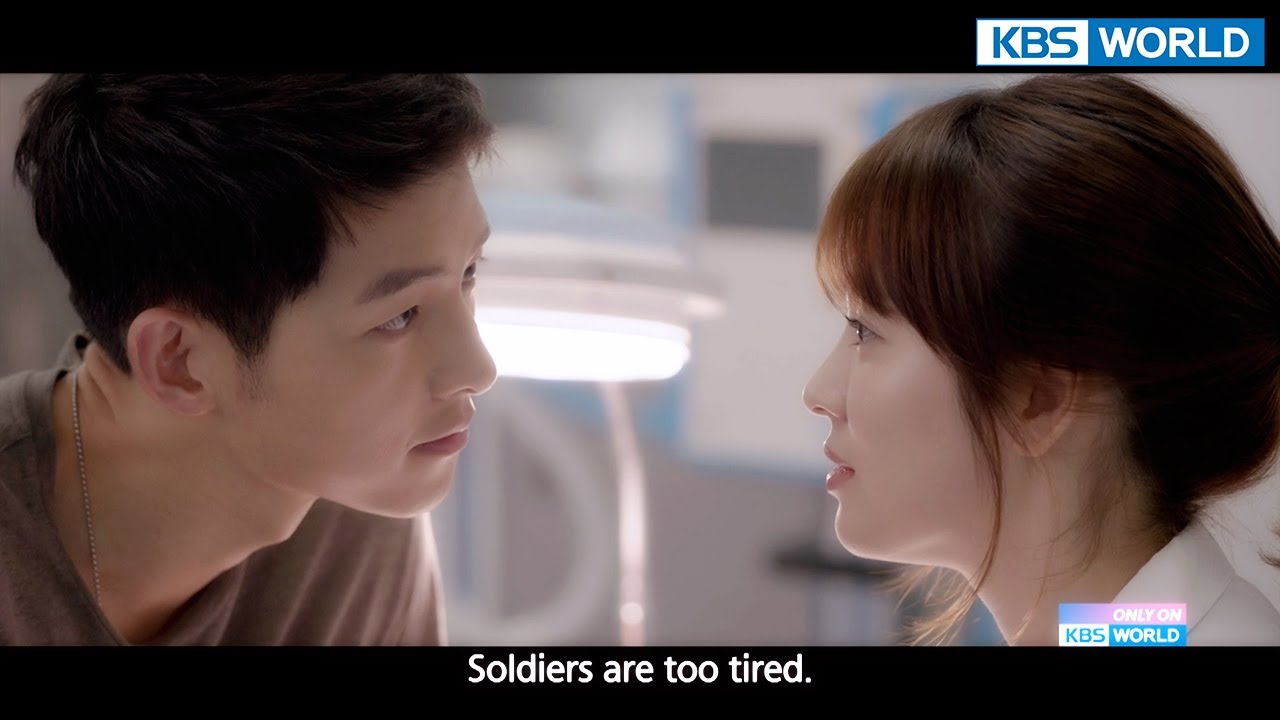
In 2016, Descendants of the Sun became a landmark example of full pre-production. The entire 16-episode drama was filmed and post-produced before the series began airing.
Producers spent about six months filming and completing post-production. The production cost was around KRW 13 billion.
That large budget was not simply the price of pre-production. The show included extensive overseas filming in Greece, major sets, earthquake sequences, CG and expensive stars.
International distribution was another major reason for the schedule. The drama was designed to premiere in South Korea and China at the same time, which required the completed material to pass Chinese review in advance.
Watch: Descendants of the Sun — KBS WORLD TV
What it shows: the overseas locations, action and cinematic scale of one of Korea’s best-known pre-produced dramas.
Why it matters: this is a case where advance production was connected to both production complexity and international release.
Watch for: how many locations, large-scale scenes and production elements would be difficult to finish on a weekly live-shoot deadline.
6. Did Pre-Production Make Descendants of the Sun a Ratings Hit?
The result was extraordinary. The finale reached 38.8 percent nationwide according to Nielsen Korea.
Advertising sales reached KRW 12.2 billion, close to the drama’s KRW 13 billion production cost. Commercially, it became an exceptional success.
But one spectacular hit does not prove that pre-production causes high ratings. The dramas that followed make that very clear.
7. Major Pre-Produced K-Dramas After Descendants of the Sun
This is a representative list, not every pre-produced Korean drama ever made. The ratings below are each show’s highest nationwide Nielsen Korea rating.
| Drama | Network / Year | Pre-Production Note | Peak Nationwide Rating |
|---|---|---|---|
| Descendants of the Sun | KBS2 · 2016 | 100% pre-produced; Korea-China simultaneous release | 38.8% |
| Uncontrollably Fond | KBS2 · 2016 | 100% pre-produced | 12.9% |
| Moon Lovers: Scarlet Heart Ryeo | SBS · 2016 | 100% pre-produced | 11.3% |
| Hwarang | KBS2 · 2016–17 | Filming completed months before premiere | 13.1% |
| Saimdang, Light’s Diary | SBS · 2017 | Completely pre-produced; later re-edited | 16.3% |
| Are You Human Too? | KBS2 · 2018 | Full filming completed before broadcast; extended CG work | 9.9% |
| Vagabond | SBS · 2019 | Completely pre-produced after a long filming schedule | 13.1% |
Note: these figures are useful as examples, not as a controlled experiment. Network, time slot, year, competitors and audience habits differ from show to show.
8. So Does Pre-Production Increase Ratings?
Not consistently. The table makes that hard to argue.
Descendants of the Sun reached 38.8 percent. Other fully pre-produced dramas in the same era peaked around 10–16 percent.
Uncontrollably Fond started strongly but later fell into single digits. Because the series had already been filmed, producers had less ability to rewrite the story around viewer response.
Saimdang offers an interesting middle case. Filming was finished, but SBS still re-edited completed footage after ratings weakened.
It can improve production conditions for certain projects, but viewers still decide whether the finished story is worth watching.
Writing, casting, genre, competition, marketing, network and timing still matter enormously. Even the producer of Descendants of the Sun credited its writers, cast and story rather than treating pre-production as the magic ingredient.
9. Where Pre-Production Clearly Wins: Global Delivery
The ratings advantage is uncertain. The distribution advantage is much easier to see.
Descendants of the Sun needed finished material for simultaneous release and advance review in China. That was one reason the entire series had to be completed early.
In 2017, the pre-produced JTBC drama Man to Man was distributed through Netflix to roughly 190 countries alongside its Korean run.
Global streaming adds more work before release: subtitles, dubbing, VFX, sound, final masters and platform delivery for multiple markets.
That is why Netflix Korea’s 2026 statement about establishing a 100% pre-production system fits the larger industry shift.
The old question was: “Can we finish next week’s broadcast in time?”
The new global question is: “Can we finish the entire season before viewers around the world press Play?”
Watch: IVE — “I AM”
What it shows: a large-scale official K-pop music video built around multiple sets, locations and a very controlled visual identity.
Why watch: after comparing long television production schedules, this is a lighter example of another carefully manufactured Korean screen product.
Watch for: how much location, styling and visual planning is compressed into just a few minutes.
10. Even the Definition of “Success” Has Changed
There is another reason not to build one giant average from old pre-produced dramas. The measurement system changed.
A 2016 terrestrial drama could be judged by a nationwide Nielsen rating of 10, 20 or 30 percent. A Netflix original has no directly comparable Korean broadcast rating.
Streaming platforms instead use measures such as global views, viewing hours and country rankings. Production changed, and the scoreboard changed with it.
11. The Risk Did Not Disappear. It Moved.
Live-shoot keeps more creative flexibility after broadcast begins. The price is deadline risk at the end.
Pre-production creates more production stability. The price is committing money and creative decisions before audience reaction arrives.
Pre-production risks money and locked decisions earlier.
Neither system removes uncertainty. It only decides where the uncertainty lives.
Leave the Production Studio for a Hidden Food Alley in Namdaemun
What it shows: Danny & Diggy explore a small food alley inside Seoul’s Namdaemun Market.
Why watch: after budgets, ratings and global streaming, this brings the page back to noisy stalls, chopsticks and everyday Seoul.
Watch for: the small, improvised street scenes that feel very different from the carefully controlled world of a television production.
The Bottom Line
Yes, many Korean dramas really did start broadcasting while later episodes were still being written, filmed and edited. That was the live-shoot system.
It gave producers unusual freedom to react to ratings and audience response. Cast and crew often paid for that flexibility with punishing deadlines.
Descendants of the Sun showed that a fully pre-produced drama could become a huge domestic and international hit. The dramas that followed also showed that pre-production itself does not guarantee ratings.
Its clearer advantages are production stability, post-production time and global delivery.
That is why the history of Korean drama production is bigger than “they used to film late, and now they film early.”
K-drama has been moving from weekly television that could still change after viewers arrived toward finished content designed to travel around the world before the audience presses Play.
The risk did not disappear. It moved.
Continue Exploring K-Dramas
Sources & Method
Ratings in the comparison table are representative peak nationwide Nielsen Korea figures reported at the time. They should not be averaged across different networks, time slots and eras as if they were a controlled experiment.
- KoBiz — Netflix Marks 10 Years in Korea
- Yonhap — Descendants of the Sun producer on full pre-production
- Yonhap — Descendants of the Sun ratings, advertising and production cost
- Korea Communications Agency — Korean drama production costs and pre-production risk
- KCI — Study on Korean TV drama production structure and labor conditions
- Contemporary Yonhap and Soompi reports were cross-checked for the pre-production status and Nielsen Korea ratings of Uncontrollably Fond, Moon Lovers, Hwarang, Saimdang, Are You Human Too? and Vagabond.
Post a Comment