Updated: September 7, 2026
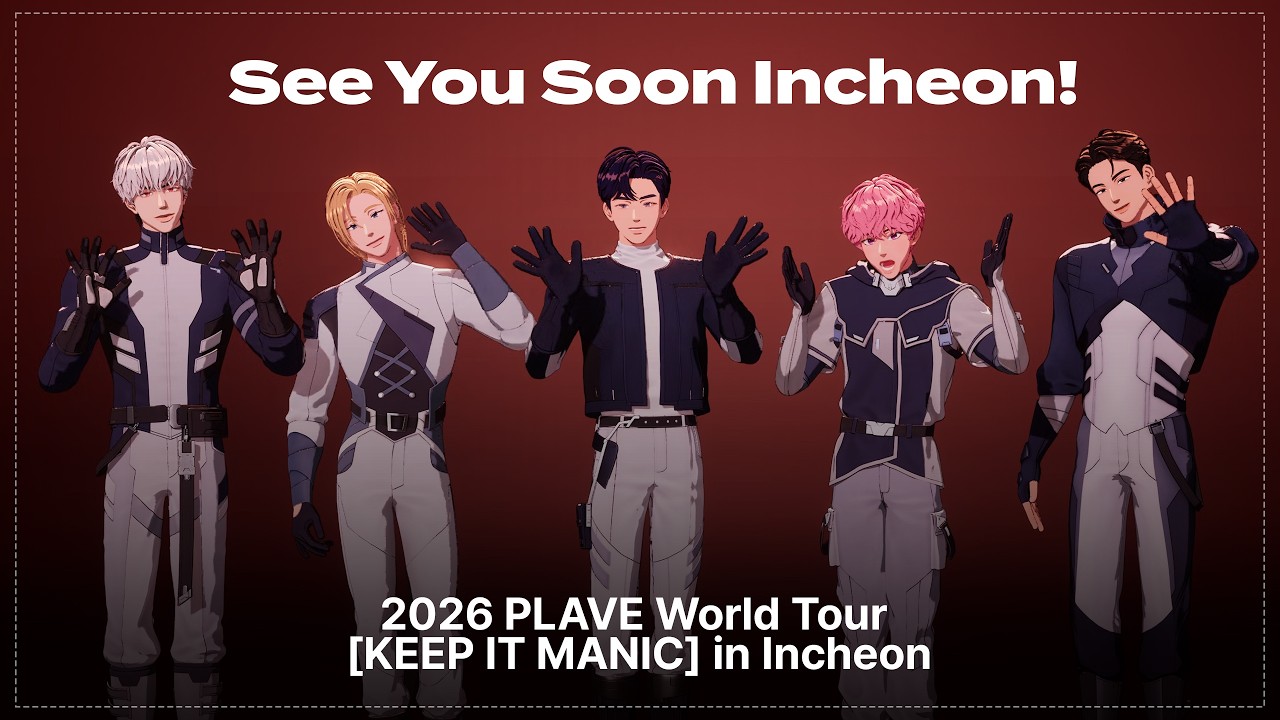
Imagine discovering a K-pop group with five members who sing, dance, release albums, chat with fans live and perform in major arenas.
Then you notice something unusual: the members look like animated characters.
That is PLAVE. And if you have never seen a virtual idol before, your first question is probably the obvious one:
Are these five members AI?
No—not in the way most people mean when they say “AI idol.” Real human performers sing, speak and move behind PLAVE’s digital avatars. Motion-capture and real-time graphics turn those performances into the characters fans see.
The technology is new enough to look futuristic. The relationship underneath it is much more familiar: artists performing for fans.
PLAVE is a five-member virtual K-pop group represented by digital avatars. Behind those avatars are real human performers who sing, talk, move and participate in creating music and choreography. Motion capture translates their movement to the avatars. AI or automation may be used in surrounding technology such as translation, but that does not make the members themselves AI-generated performers.
1. What Is PLAVE? The 30-Second Version
PLAVE is a South Korean five-member virtual boy group made up of Yejun, Noah, Bamby, Eunho and Hamin. The group debuted in 2023 under VLAST.
In most of the ways that matter to a K-pop fan, PLAVE behaves like another idol group. They release songs and physical albums, build comeback eras, communicate with a named fandom, appear at major music events and hold physical concerts.
The big difference is the body you see. Instead of showing the performers’ physical appearance, PLAVE appears publicly through stylized digital characters.
A real artist performs behind the scenes → technology captures the performance → you see the PLAVE character on screen.
Watch PLAVE First — Before Thinking About the Technology
PLAVE — “WAY 4 LUV” Official M/V
What it shows: PLAVE as a pop act rather than as a technology demonstration.
Why watch: this is the easiest starting point for someone who has never seen the group.
Watch for: how quickly the animated appearance begins to feel like a normal group identity once the music starts.
2. Virtual Idols Did Not Begin With PLAVE
PLAVE feels new, but the basic idea of a singer with a virtual body is much older. Korea experimented with cyber singers as far back as 1998, when the digital singer Adam appeared.
Other countries developed different versions of the idea. Japan built large virtual-singer and VTuber cultures, where digital characters perform, stream and form long-term relationships with audiences.
VLAST CEO Lee Sung-goo has said that the success of Japan’s VTuber market influenced his thinking. But he also reached an important conclusion: the ability of the actual human performer mattered.
That became one of PLAVE’s defining choices. Rather than building the group around AI-generated personalities, VLAST planned from the beginning for real artists to perform behind the characters.
NME — How PLAVE Combines Virtual Characters With Human Performers →
3. Why PLAVE Is More Than a Technology Experiment
Many virtual projects can attract curiosity. The harder test is whether people stay after the novelty disappears.
PLAVE has crossed that line. By 2026, the group had become a benchmark against which Korea’s newer virtual-idol groups were being compared.
They release physical albums, headline large shows and operate inside the same fandom, merchandise and comeback ecosystem used by conventional K-pop groups.
In 2026, PLAVE also moved into a multi-city world-tour phase. That matters because it shifts the question from “Can virtual idols work online?” to “Can a virtual idol deliver a convincing large-scale live experience?”
That second question is much harder.
Watch: PLAVE at the MAMA Awards
What it shows: PLAVE performing “WAY 4 LUV” inside one of K-pop’s biggest annual award-show environments.
Why it matters: this is a useful visual answer to the idea that virtual idols exist only in small online niches.
Watch for: how the virtual performance is presented inside the same K-pop event ecosystem as conventional idols.
4. How Does PLAVE Actually Work?
This is the part that sounds complicated until you remove the technical vocabulary.
↓
Motion Capture
↓
Digital Avatar
↓
Screen / Live Broadcast / Concert
A human performer moves. Motion-capture technology reads that movement. The digital character follows it, and a real-time graphics system turns the result into the image fans see.
So when a PLAVE member turns his head, dances or reacts unexpectedly during a live stream, the basic idea is not that an AI has invented a random movement. A human action is being translated into a digital body.
There is much more technology behind the final picture—3D modeling, lighting, rendering, cameras and broadcasting systems—but those are production layers around the performer.
Virtual Pop Stars and the Humans Behind Them
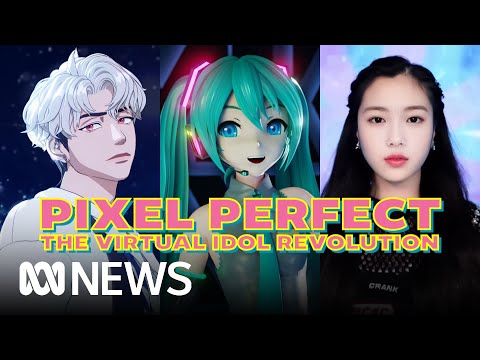
What it shows: an English-language explanation of virtual artists, including PLAVE, and the humans performing behind digital characters.
Why watch: it gives a beginner a much faster visual explanation than technical vocabulary alone.
Watch for: the difference between the character you see and the human performance driving it.
VLAST also presented the production technology behind PLAVE at Unreal Fest Seoul, including motion capture and its real-time production pipeline. The presentation is in Korean, but the technical visuals themselves are useful.
Watch the PLAVE Unreal Fest Technology Presentation →5. So Is PLAVE AI?
The simple answer is no.
The confusion happens because several different technologies get put into one bucket.
| Layer | What It Does |
|---|---|
| Human performer | Sings, speaks, moves and performs. |
| Avatar | The visual body fans see. |
| Motion capture | Transfers human movement to the digital character. |
| Rendering / broadcast technology | Turns that performance into the image viewers receive. |
| AI / automation | Can assist surrounding services such as translation. |
Technology can be used around PLAVE without replacing the performers themselves.
A translation system can be automated. A rendering pipeline can be highly technical. Neither fact means that an AI has replaced Yejun, Noah, Bamby, Eunho or Hamin as the performing artists.
PLAVE’s public body is virtual. The performance driving it is human.
6. How Can a Virtual Group Go Live—or Hold a Physical Concert?
This becomes easier to understand once you stop thinking of PLAVE as a prerecorded animation.
The members regularly do real-time broadcasts. In 2026, VLAST expanded PLAVE LIVE beyond its original YouTube broadcasts and continued testing simultaneous live-streaming infrastructure through September. It also expanded real-time translation tools for international viewers.
The important point is not the platform name. It is that a live PLAVE broadcast has the same basic problem as any other live performance: the audience is waiting for what the performers do next.
A physical concert follows the same principle at a much larger scale. The audience is physically present. The performers perform in real time. Technology delivers the digital members into the stage environment.
That is why “virtual concert” does not simply mean “people watching a prerecorded cartoon in a theater.”
7. Why Do Fans Treat PLAVE as Real Artists?
This may be the most important question in the entire article.
A perfect avatar is easy to admire for a few minutes. Building a fandom that stays for years requires something else: personality, music, repeated interaction and a sense that the same person keeps showing up.
VLAST originally heard suggestions that virtual idols could be more flexible: if the character stayed the same, perhaps the performer behind it could be replaced.
CEO Lee Sung-goo later explained that the company reached the opposite conclusion. As PLAVE developed, the character and the human artist became too closely connected for the line-up to be treated as interchangeable.
The members also participate in writing music and creating choreography. Fans therefore follow more than a visual character. They follow a continuing creative personality.
The continuity of the person fans know is not.
aespa — Virtual Concept Is Not the Same as a Virtual Idol
What it shows: aespa’s “Next Level,” built around a world that includes digital avatars and virtual lore.
Why it matters: aespa’s four human members still appear publicly as themselves. PLAVE uses digital avatars as the members’ public bodies. These are different models.
Watch for: how K-pop can use virtual worlds without making the performers themselves virtual idols.
8. Is This Just a PLAVE Trend—or the Start of Something Bigger?
Virtual entertainment is not unique to Korea. Japan has long-established virtual-singer and VTuber ecosystems, and digital performers now operate across several global markets.
What makes the Korean development interesting is the attempt to combine that virtual-performer model with the full K-pop system: albums, fandoms, live communication, comeback cycles, merchandise, major stages and physical tours.
The Korean market is already becoming more crowded. New virtual groups are entering a field that PLAVE helped make much more visible.
That does not mean virtual idols are about to replace traditional K-pop groups. A more realistic possibility is that virtual idol becomes another recognizable category inside pop entertainment.
Three things are worth watching next.
First, the technology may become less visible. Once motion capture and rendering stop feeling novel, fans will judge the same things they judge in other artists: songs, personality, performance and consistency.
Second, AI may grow around the artist before it replaces the artist. Translation, production assistance and global fan-platform services are obvious areas for expansion.
Third, physical concerts may become the hardest test. It is one thing to make an avatar look convincing on a phone. It is much harder to make thousands of people in a stadium feel that a live artist is truly present with them.
Leave the Virtual Stage and See Korea for Two Weeks
What it shows: Allan Su travels through South Korea on a 14-day itinerary.
Why watch: after virtual avatars, motion capture and digital stages, this is the opposite kind of reward—real streets, food and landscapes.
Watch for: how quickly the mood changes from futuristic K-pop to everyday Korea.
The Bottom Line
PLAVE looks virtual because the members appear through digital avatars. But the performers behind those avatars are real people who sing, move, create and interact with fans.
The easiest formula is:
So virtual does not equal AI.
And once that confusion disappears, PLAVE leaves us with a much more interesting question:
What actually makes an artist feel real—the face we see, or the voice, creativity, personality and relationship that keep returning?
PLAVE is testing that question in the middle of mainstream K-pop.
Continue Exploring K-Pop
Kakao Entertainment — MMA2026 lineup and PLAVE chart performance →
The documented system establishes live motion capture, real-time rendering and audience interaction. It does not justify assuming that every vocal element of every PLAVE performance is processed live in one identical way.
VLAST’s documented production pipeline still starts with human performance data. Live motion capture is streamed into Unreal Engine, then additional tools handle issues such as foot placement, character proportions and collisions between digital bodies and costumes. For concerts, VLAST has also described recreating real venues digitally so stage visuals can be checked from different audience positions before the show.
That matters because PLAVE is competing inside the same chart, award-show and fandom systems used by conventional K-pop groups. The visible bodies are digital, but the market around them—streaming, ticketing, merchandise, memberships and arena attendance—is not.
PLAVE’s 2026 activity makes the “virtual idol” question more concrete. The group is part of the regular MMA2026 artist lineup rather than a separate virtual-artist showcase, and its Caligo Pt.2 release placed all five tracks on Melon’s TOP100. “Born Savage” reached No. 2 on TOP100 and No. 1 on HOT100.
2026 Update: Why MMA2026 Matters for PLAVE
Sources
- NME — PLAVE and VLAST on the human performers behind the virtual group
- The Korea Times — Korea’s expanding virtual-idol market in 2026
- Korea Ministry of Culture, Sports and Tourism — Korea’s virtual-idol history
- VLAST Press — Virtual Pop Stars and the Humans Behind Them
- VLAST / Weverse official 2026 PLAVE LIVE streaming and translation notices, checked September 7, 2026.
Post a Comment